

Friendship fights at 4 to 7 aren’t a sign something’s wrong. They’re practice. Pediatricians note that even three-year-olds are able to work out disputes by taking turns or trading toys with a little coaching. And before your child’s first drop-off playdate, the AAP recommends asking a few direct questions, including who will be watching the kids and whether there are guns in the house.
By our editors · Facts checked October 8, 2026. This guide is general information, not medical advice.
Disclosure: Treehouse Learning Center, which runs childcare and therapy programs in Massachusetts, publishes KidBrief. Our directory lists every licensed program, and we always label ours. Some links may be affiliate links: if you buy through them, we may earn a commission at no extra cost to you. How we make money.
The short version
- Kids this age are just learning to play together, share and take turns, and they still won’t always share. Your calm example is the best lesson.
- Coach in two moves: help your child name the emotion out loud, then walk through simple problem-solving steps: What’s the problem? What could we do? Is it safe and fair?
- We found no pediatric group that sets an age for drop-off playdates. Many 4- and 5-year-olds show more independence, but readiness, not a birthday, should decide.
- Nearly 7 million U.S. children live in homes with at least one gun stored loaded and unlocked, a national study published in May 2026 estimates. Ask every family.
- More children ages 1–4 die from drowning than from any other cause. Ask about pools and who’s watching.
Why do kids this age fight with friends so much?
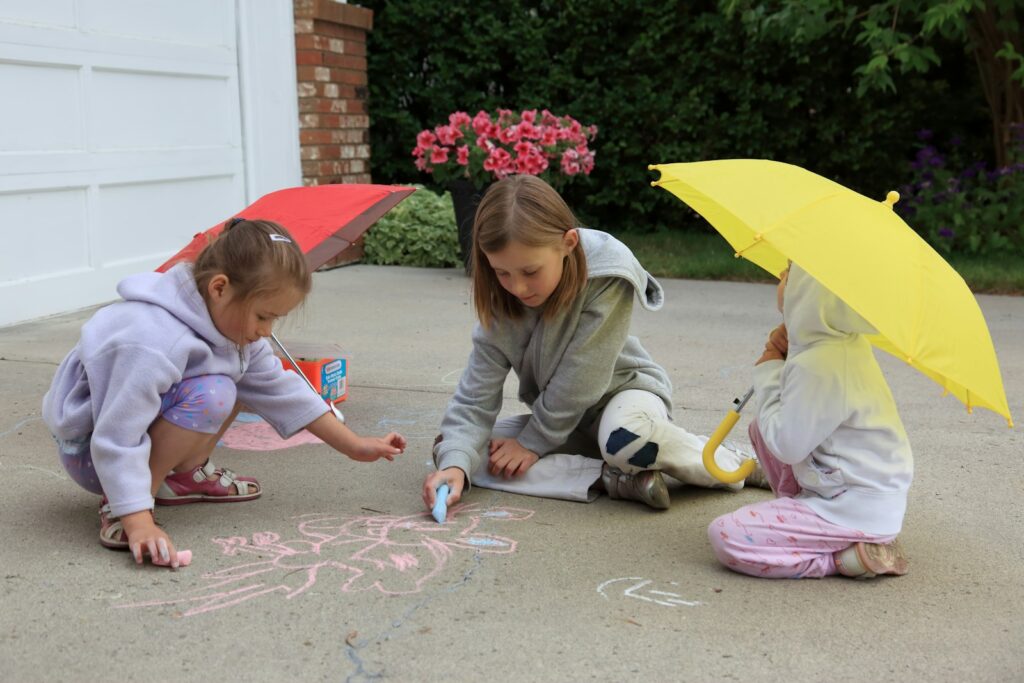
Because they’re finally playing together for real. Preschoolers actually play with other children, interacting instead of just playing side by side, and they learn to take turns and share toys in small groups. By 4 and 5, children want to please friends and want to be like them. By 5, most follow rules or take turns when playing games with other children.
Put that together: a kid who cares a lot about friends, is still learning to share and wants the rules followed exactly. That’s a recipe for “That’s not fair!” at least once a playdate. Into the early school years, friendships get more complicated, and the AAP notes that rarely do people learn the fine art of friendship without some support or role-modeling. That’s your job: coach, not referee.
How do I help my child solve a fight with a friend?
Step one: name the feeling
The CDC’s emotion-coaching steps are notice, connect, listen, name and then find good solutions. Name the emotion out loud, with simple, descriptive words, and accept the feeling before you set a limit on the behavior: “It’s OK to feel angry, but it’s not OK to throw our blocks.” The AAP adds: help your child find words for their feelings and encourage them to “use your words” instead of acting out.
Give your child more words than “mad” and “sad”: frustrated, left out, jealous, embarrassed, disappointed, worried. A kid who can say “I felt left out” has a much easier time fixing it than a kid who can only shove.
Step two: walk through the problem
The National Center for Pyramid Model Innovations (NCPMI) teaches preschool teachers a set of problem-solving steps that work just as well on the living room floor:
- Calm first. Nobody solves anything mid-meltdown. Breathe, get a drink of water, sit together.
- What’s the problem? Say it plainly: “It sounds like you both want the scoop.”
- Think of solutions. “Hmm, what could we do?” Take turns, trade, use a timer, play together, ask nicely, get a grown-up.
- Check each idea. Would it be safe? Would it be fair? How would everyone feel?
- Try it. Let them pick one and go.
- Follow up. Notice the win: “You solved the problem. You’re taking turns with the scoop.”
Step three: help them see the other kid’s side
The AAP suggests helping your child see the situation from the other child’s point of view, and reminding them that when two kids share a toy, each gets an equal turn. With school-age kids, the AAP suggests guiding them to act only after their own emotions have been identified and they’ve considered their friend’s feelings or motives.
When should I step in?
Right away if it turns physical. The AAP says to stop your child from hurting others and move them away from other children if they don’t calm down. With preschoolers, stay present and available when they play with others. As they get older, you can step back and coach afterward.
| Your child says | Try saying |
|---|---|
| “She’s not my friend anymore!” | “You sound really hurt. What happened?” |
| “He won’t let me play.” | “That feels lonely. Want to think of two ways to join in?” |
| “It’s not fair, she always goes first!” | “You want a fair turn. What could make it fair for both of you?” |
| “I hit him because he took it.” | “You were mad he took it. Hitting isn’t OK. What could you do next time?” |
Then help them make up. The AAP calls teaching kids to preserve friendships with all their ups and downs a tremendous skill. A sorry, a drawing or a “want to play tomorrow?” goes a long way at 5.
What age can kids go to a playdate without a parent?
We couldn’t find any pediatric or public health group that sets an age. The AAP’s playdate guidance focuses on what to ask the other family, not on a minimum age. Developmentally, the AAP notes that 4- and 5-year-olds show more independence and may even visit a next-door neighbor by themselves. It also lists being unable to separate from parents without major protest at this age as something to raise with your pediatrician.
Signs your child may be ready
- Separates from you without a big struggle.
- Uses the bathroom and washes hands mostly on their own.
- Can tell an adult “I need help,” “I’m hungry” or “I want to go home.”
- Knows your family’s body-safety rules. The AAP recommends teaching kids that it is never OK for anyone to look at or touch their private parts without their permission, that they should always tell you or another trusted grown-up, and that you will listen and believe them.
Start small. Host first: the AAP says to welcome your child’s friends to your home, which also shows you how your child handles friendships up close. Then try a short drop-off with a family you know. The AAP adds that knowing your child’s best friend’s family can be helpful, and that parents should be involved in creating social plans.
Safety questions to ask before a drop-off playdate
It can feel awkward. The AAP’s take: the other parent is likely to be glad you asked. Its five questions, plus two of ours:
- Who will be watching the kids? Ask whether an adult will be home the whole time and who else will be there.
- Is there a pool or trampoline? The AAP recommends a 4-foot-high, four-sided pool fence with a self-latching gate, an adult close enough for “touch supervision” whenever kids under 5 are in or near water, and no trampolines at home. Drowning is the second leading cause of unintentional injury death for kids 5–14, after car crashes.
- Are there guns in the home, and how are they stored? The AAP says all guns should be stored unloaded and locked up, with the ammunition locked up separately, and warns that telling your child not to touch guns isn’t enough. If you don’t like the answer, offer to host. In Massachusetts, it’s illegal to store a gun unless it’s in a locked container or fitted with a tamper-resistant lock or other safety device.
- What are your screen rules? If you limit movies or games, the AAP suggests telling the other parent. Our screen time guide and the AAP’s Family Media Plan can help you name your own rules first.
- Any pets? Ask if they’re friendly, and say so if your child is nervous around animals. The AAP notes that children are the most frequent victims of animal bites.
- Our add: share health details. The AAP suggests telling the other parent about things like food or pet allergies. Hand over medicine and an action plan if your child needs one.
- Our add: will anyone be driving? If so, send the right car seat or booster. Our car seat and booster guide covers the Massachusetts rules.
A script that works: “We ask every family the same few things before a first playdate: who’ll be home, any pool, and whether there are guns in the house and how they’re stored. Anything you want to know about our kid?”
For children who need extra support
Every child needs a different kind of coaching. The AAP suggests helping shy kids warm up initial interactions, helping outgoing kids make room for a quieter friend, and coaching kids with ADHD to slow down so they can give their friend “a break” before being too direct or harsh.
For a child with a speech delay or autism, practice a few phrases ahead of time (“Can I play?” “My turn next.” “Stop, I don’t like that.”), keep early playdates short and one-on-one, and tell the host how your child communicates and what helps when they’re overwhelmed. If your 4- or 5-year-old shows little interest in playing with other children or seems aloof with other kids and adults, the AAP says to talk with your pediatrician. Our guides to speech delays and early signs of autism and ADHD explain next steps in Massachusetts.
Purchased by Treehouse
Friendship Is Forever
A picture-book option for opening a conversation about friendship, kindness, and repairing a rough moment. Preview the book for your child’s fit and read it together rather than expecting a book to solve the conflict on its own. Check current details on Amazon (paid link).
From our publisher: Treehouse Learning Center
Preschool, pre-K and after school in Lynn
Treehouse Learning Center runs bilingual (English-Spanish) programs for ages 33 months to 12 years in Lynn, from preschool and pre-K to after school, with meals included.
Common questions
Should I let kids work out their fights on their own?
Gradually. With preschoolers, the AAP suggests being present and available and giving instruction on sharing and resolving conflicts without hitting. Step in right away for anything physical. As skills grow, coach more from the sidelines.
Is it rude to ask another parent about guns?
No. The AAP recommends asking whether there are guns in the home and how they’re stored, and says the other parent is likely to be glad you asked. Asking every family the same way takes the sting out of it.
My child says nobody wants to play with them. What do I do?
Listen first and name the feeling. The AAP suggests helping your child identify how they feel when a friendship creates a disappointment, then setting up a low-pressure playdate with one child. If it keeps happening, mention it to the teacher and your pediatrician.
Sources
- Social Development in Preschoolers: Learning How to Share & Cooperate (HealthyChildren.org, American Academy of Pediatrics)
- Developmental Milestones: 4 to 5 Year Olds (HealthyChildren.org)
- What Parents Can Do to Support Friendships (HealthyChildren.org)
- 5 Questions to Ask Before a Playdate (HealthyChildren.org)
- Sexual Behaviors in Young Children: What’s Normal, What’s Not? (HealthyChildren.org)
- Family Media Plan (HealthyChildren.org)
- Noticing and Naming Emotions (CDC)
- Milestones by 5 Years (CDC)
- Drowning Facts (CDC)
- Problem Solving in the Real World (National Center for Pyramid Model Innovations)
- 7 million children live in a home with an unlocked, loaded gun, a study finds (NPR, on Miller et al., JAMA Network Open, 2026)
- General Laws, Part I, Title XX, Chapter 140, Section 131L (Massachusetts Legislature)


Leave a Reply