
There’s no magic birthday for a first phone. The American Academy of Pediatrics (AAP) says readiness matters more than age, and in a 2025 Pew Research Center survey, 68% of parents said kids should be at least 12 before getting their own smartphone. Here’s how to tell if your kid is ready.
By our editors · Facts checked October 7, 2026. This guide is general information, not medical advice.
Disclosure: Treehouse Learning Center, which runs childcare and therapy programs in Massachusetts, publishes KidBrief. Our directory lists every licensed program, and we always label ours. Some links may be affiliate links: if you buy through them, we may earn a commission at no extra cost to you. How we make money.
The short version
- No magic age. Pediatricians judge maturity, not birthdays.
- Most parents want to wait until 12 for a smartphone, yet about 6 in 10 parents of 11- and 12-year-olds say their kid already has one.
- Start small. A calling watch or a no-internet phone covers safety without handing over the whole internet.
- A phone and social media are two separate decisions. Make them one at a time.
- Write the rules down and set up parental controls before the phone leaves the box.
What age do most kids get a phone?
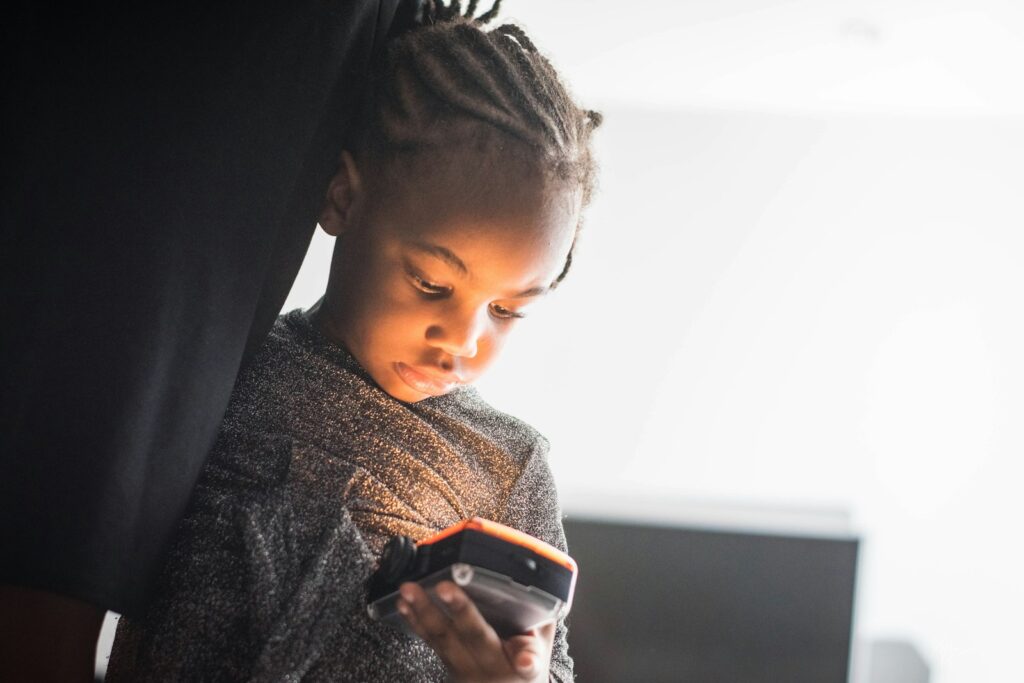
Younger than you might think. In Pew’s 2025 survey of parents of kids 12 and under, about 6 in 10 parents of 11- and 12-year-olds said their child has their own smartphone. For 8- to 10-year-olds, it was about 3 in 10.
Some start earlier: Common Sense Media’s 2025 census found one in four kids has their own cellphone by age 8.
But most parents would rather wait: 68% in the same Pew report said 12 or older. Feel like the last holdout at pickup? You have more company than it looks.
What do pediatricians actually say?
The AAP’s Center of Excellence on Social Media and Youth Mental Health says research doesn’t point to one perfect age. It asks about your kid instead: Do they follow your tech rules now? Do they take responsibility? And are you ready to set rules and back them up?
The AAP’s HealthyChildren.org guide to a first phone, updated in June 2026, suggests a flip phone or a calling watch as a first step. It also says to set up controls with your child, explain why, and hand over more freedom as they show responsibility.
What the research says about early smartphones
A study of more than 10,500 adolescents in the journal Pediatrics, reported in December 2025, linked owning a smartphone by age 12 with higher odds of depression, too little sleep and obesity. That’s a link, not proof of cause, and how a phone is used likely matters as much as when.
What about social media?
Treat it as its own decision. The AAP says to decide on the phone and on social media separately, app by app.
The U.S. Surgeon General’s advisory on social media and youth mental health found that up to 95% of 13- to 17-year-olds use social media. Kids who spend more than 3 hours a day on it face double the risk of mental health problems, including symptoms of depression and anxiety. It urges families to set tech-free zones.
Wait Until 8th: what the pledge actually asks
Wait Until 8th asks parents to hold off on a smartphone until at least the end of 8th grade. It activates once 10 families from the same grade and school sign, so no kid is the only one without. Basic phones and calling watches are allowed, and more than 115,000 parents have signed, the group says.
The Massachusetts angle: phones in school are on the table
Bill S.2581, which would make every district bar student phone use during the school day, passed the Senate 38–2 in July 2025. The House passed its own version 129–25 in April 2026 and added a social media ban for kids under 14.
As of October 7, 2026, the bill sits in a House–Senate conference committee with no final deal posted. Our Massachusetts school cell phone ban explainer has the details.
Is your child ready? A 10-point checklist
One point per yes. Mostly yeses? Start small. Mostly nos? Check again in a few months. We built this list from the AAP’s readiness questions.
- They follow your current screen rules, most days without a fight.
- They keep track of things that matter, like keys and library books.
- They can explain why they want a phone, beyond “everyone has one.”
- They come to you when something online feels weird or scary.
- They can stop a game or show when time’s up without a meltdown.
- They apologize and make it right when they hurt someone.
- They have real reasons to reach you: walking home, practices, two homes.
- They can sit out group-chat drama instead of piling on.
- They sleep well now, and you can keep the phone out of the bedroom at night.
- You’re ready to set controls, check in every few weeks and adjust.
Want a second opinion? The AAP and AT&T built a free PhoneReady questionnaire that weighs maturity and family values, not just age. More tools live in our family guides.
First-phone alternatives: start small
It’s not a choice between no phone and the whole internet. Climb these steps:
- A calling watch: calls and texts with contacts you approve, plus location. No browser.
- A basic or kid-safe phone: calls, texts and a few tools, with no internet or social media.
- A kid-safe smartphone: real apps from a vetted list, with a parent dashboard for schedules and contacts.
Our 2026 guide to the best first phone for kids compares seven options side by side. Here are three we’d start with.
What we’d use
Gabb Watch 3e
Calls and texts with up to 100 parent-approved contacts, location updates about every 15 minutes, and no browser, social media or camera. A Gabb plan is required. Ages 5–12.
What we’d use
Gabb Phone 4
Looks like a real phone, with calling, texting, GPS and parent tools, but no internet browser, no social media and no app store. A Gabb plan is required. Ages 9–14.
What we’d use
Pinwheel phone
A smartphone that starts locked down: only safelisted contacts, a curated library of therapist-approved apps, no web browser by default, and schedules you set in the Caregiver Portal (subscription required). Made for tweens around 12.
Write a family phone contract
The AAP suggests a written phone agreement that covers when, where and how the phone gets used. Start with the AAP’s free Family Media Plan, then add phone terms like these:
- The phone charges outside bedrooms overnight.
- No phones at dinner or during homework.
- Parents know the passcode and may check messages.
- New apps need a parent yes first.
- If something online feels wrong, tell us. You won’t lose the phone for telling.
- We review this deal every few weeks and loosen rules as trust grows.
Sign it together and stick it on the fridge.
Set up parental controls before you hand it over
Do it while the phone is still in the box. The AAP recommends setting privacy, content, contact, download and downtime controls, and explaining why each one matters.
- iPhone: Apple’s Child Account is required for kids under 13. You approve apps (Ask to Buy) and new contacts, set time allowances and schedules, and turn on Communication Safety, which helps shield kids from nudity in Messages and FaceTime.
- Android: Google Family Link sets time limits and downtime, approves apps, restricts websites in Chrome, manages calls and texts, and shares location.
- Kid-safe phones and watches: Gabb, Pinwheel, Bark and TickTalk build controls into their own parent apps.
Starting with a tablet? See our best tablet for kids guide. Little ones at home too? Read our screen time guide for babies, toddlers and preschoolers.
For children who need extra support
Kids with ADHD, autism, anxiety or a speech delay may need a different timeline, and that’s fine. Readiness is about skills like impulse control, so talk it through with your pediatrician and your child’s care team.
Some kids use a tablet or phone to communicate. The American Speech-Language-Hearing Association (ASHA) notes that screen-time worries don’t apply to a screen used as part of a communication system. If your child needs a device at school, put it in their plan: Massachusetts’ pending Senate bill would exempt device use written into an IEP or 504 plan. Our IEP vs. 504 plan guide explains the difference.
Common questions
What is the average age kids get a phone?
There’s no official average. In Pew’s 2025 survey, about 6 in 10 parents of 11- and 12-year-olds said their child has a smartphone, so for many families it happens around middle school.
Should my kid have a phone for safety?
Nearly every parent whose child has a smartphone names staying in touch as a reason, Pew found. You don’t need a smartphone for that: a calling watch or basic phone handles pickups and emergencies with far fewer risks.
Are phones banned in Massachusetts schools?
Not statewide, as of October 7, 2026. Your district’s own policy applies while lawmakers negotiate S.2581, and they have until early January 2027 to finish a deal, the Boston Globe reports.
Get the weekly briefing · See our trusted picks
Sources
- American Academy of Pediatrics: What is the appropriate age to introduce a mobile device?
- HealthyChildren.org (AAP): Your child’s first phone: Are they ready?
- HealthyChildren.org (AAP): Creating a child-friendly digital world, AAP releases new media recommendations
- AAP and AT&T: PhoneReady questionnaire (Word document, hosted by National PTA)
- HealthyChildren.org (AAP): Family Media Plan
- Pew Research Center: How parents describe their kids’ tech use (Oct. 8, 2025)
- Pew Research Center: How parents manage screen time for kids (Oct. 8, 2025)
- Common Sense Media: 2025 census of media use by kids zero to eight (press release)
- U.S. Surgeon General: Social Media and Youth Mental Health advisory
- Motherly: AAP study on the age kids get their first smartphone (Dec. 5, 2025)
- Wait Until 8th: The pledge
- malegislature.gov: Bill S.2581 history
- malegislature.gov: Bill S.2581 text
- Boston Globe: Cellphone ban bill stalls on Beacon Hill (Sept. 7, 2026)
- Gabb: Gabb Watch 3e
- Gabb: Gabb Phone 4
- Pinwheel: Phones for 12-year-olds
- Apple: Child safety and parental controls
- Google: Family Link
- ASHA Practice Portal: Augmentative and alternative communication



Leave a Reply