
A licensed home daycare in Massachusetts can care for 6 children, 8 if two are school-age, or 10 with an approved assistant, according to the state. A center follows fixed ratios by age, like 1 educator for every 3 infants under 606 CMR 7.10. Both are licensed by the same agency. The real differences are group size, backup plans, the home itself and, often, price.
By our editors · Facts checked October 8, 2026. This guide is general information, not legal advice.
Disclosure: Treehouse Learning Center, which runs childcare and therapy programs in Massachusetts, publishes KidBrief. Our directory lists every licensed program, and we always label ours. Some links may be affiliate links: if you buy through them, we may earn a commission at no extra cost to you. How we make money.
The short version
- “Family child care” is the state’s name for a licensed home daycare: care in a private residence for no more than 10 children under 14.
- Centers are “group and school age” programs. A large license covers 11 or more children, in community buildings including schools.
- Home care usually costs less for babies. In the state’s 2022 market rate survey, the median daily infant price in the Northeast region was $92.31 at centers vs. $50.00 in family child care.
- You can look up licensed programs, home or center, on EEC’s Child Care Search, with licensing visits posted since October 1, 2019.
- In a home, everyone 15 or older who lives there or is regularly on the premises needs a fingerprint-based background check.
What’s the difference between family child care and a center in Massachusetts?
Both are licensed by the Department of Early Education and Care (EEC) under the same rulebook, 606 CMR 7.00. The labels come from the definitions section:
- Family child care happens in a private home and covers no more than 10 children under 14 (or under 16 with special needs). Informal arrangements among neighbors or relatives are excluded.
- Small group and school age programs serve 10 or fewer children, but not in a private residence.
- Large group and school age programs serve more than 10 children. That includes child care centers, preschools and before- and after-school programs.
Some home providers also belong to a Family Child Care System, which offers extra support to providers and families. If you’re still sorting out what “preschool” and “pre-K” mean on top of all this, our guide to daycare vs. preschool vs. pre-K untangles the labels.
How many kids can a home daycare have? The capacity rules
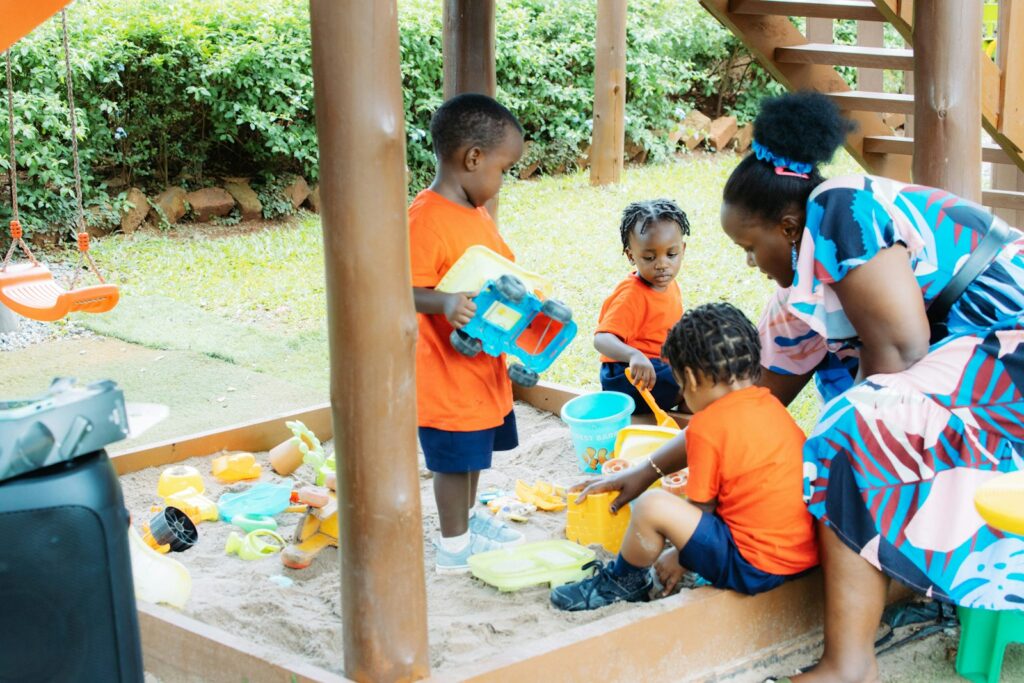
A family child care license comes in three sizes: up to 6 children; up to 8 without an assistant if at least 2 are school-age; or up to 10 with an approved assistant.
Inside those caps, the age mix is regulated by 606 CMR 7.10(4):
- One educator, up to 6 children: no more than 3 children under age 2, including at least one toddler who walks independently.
- One educator, 7 or 8 children: every child over the first 6 must be school-age.
- Two educators, 7 to 10 children: no more than 6 children under 2, including no more than 3 infants.
The number on the license is the total. EEC’s technical guidance on capacity says it includes the provider’s own children. Their kids under 5 count whenever they’re home.
One exception to know about: in September 2026, EEC selected 30 experienced home providers for a pilot that lets them serve up to 12 children instead of the usual limit of 10, which could add up to 60 seats statewide (Mass.gov). If a provider says they’re licensed for 12, ask whether they’re in the pilot.
Home vs. center at a glance
| Family child care (home) | Large group (center) | |
|---|---|---|
| Where | Provider’s private residence | Community facility, which can be a school building |
| Babies | One educator: no more than 3 under age 2 | Infants: 1 educator per 3, groups of 7 max |
| Toddlers | Mixed-age group, counted in the home’s total | 1 educator per 4, groups of 9 max |
| Preschoolers | Mixed-age group, counted in the home’s total | Full day: 1 educator per 10, groups of 20 max |
| Who’s in the group | Ages can range from birth through 13 | Usually grouped by age |
Sources for the table: 606 CMR 7.10(4) and 7.10(9), Mass.gov and EEC’s guide to choosing child care.
Is home daycare cheaper than a center?
Usually, especially for babies and toddlers. EEC’s 2022 market rate survey found these median daily prices:
| EEC region (2022) | Infant, center | Infant, home | Preschool, center | Preschool, home |
|---|---|---|---|---|
| Northeast | $92.31 | $50.00 | $62.00 | $40.00 |
| Metro Boston | $118.00 | $64.00 | $70.00 | $50.00 |
Nationally, a U.S. Department of Labor analysis found that childcare prices are higher at center-based than home-based providers. These are 2022 survey figures, so use them to compare, not as today’s price tag. For current numbers and ways to cut the bill, see our Massachusetts childcare cost guide.
Pros and cons: home daycare vs. center
Home daycare: what families like
- Small group. Outside the pilot, even the biggest license tops out at 10 children.
- Siblings together. A mixed-age group can include children from birth through age 13.
- Often lower prices for infants and toddlers (see the table above).
Home daycare: the trade-offs
- Often one adult. One educator can legally care for up to 6 children alone, or 8 with two school-agers.
- Backup varies. Some homes have an assistant qualified to step in for the provider; others don’t. A regular assistant, for example, can be alone with up to 6 children for only 25 hours in a 12-month period. A long illness or a vacation can mean you need a plan B.
- It’s a home. Household members, visitors and pets are part of the environment.
Center: what families like
- A staff, not a single provider. Ask how they cover a teacher’s sick day. With more adults in the building, there are more people to draw on.
- Same-age classrooms with fixed ratios and group caps by age.
Center: the trade-offs
- Higher prices, especially for infants.
- Bigger groups. A full-day preschool group can have up to 20 children.
- More transitions. Kids usually move rooms, and teachers, as they age up.
Once you know which setting fits your family, our guide on how to find a good daycare in Massachusetts covers where to look and how to build a shortlist.
Red flags: how to spot unlicensed care
The truth nobody puts on the flyer: “home daycare” is not a license type. EEC’s guide says almost all child care provided outside a child’s own home must be licensed or authorized by EEC. The state’s definition of family child care leaves out informal arrangements among neighbors or relatives.
- No license on the wall. Programs must post their current license where parents can easily see it.
- Not on Child Care Search. Look the provider up by name or town on Child Care Search.
- More kids than the license allows. Ask what the licensed capacity is, then count heads at pickup.
- No drop-ins. Your enrollment paperwork should note your right to visit unannounced at any time while your child is in care.
When you find the listing, read the visit history. Visits with problems are posted no later than 90 days after they close, and stay up for five years, per EEC policy. You can also call an EEC regional office to ask about a program’s licensing history or file a complaint. Our tour questions and license-check guide walks through it step by step.
Questions to ask a home daycare (that you wouldn’t ask a center)
- “What happens when you’re sick?” EEC’s own guide suggests asking about backup care. Every home must also name an emergency caregiver who can arrive within ten minutes. Ask who that is, and what happens on day two of a flu.
- “Who else lives here or comes by?” Household members and regular visitors 15 and older need background checks, including fingerprints. A “household member” is anyone living there 30 consecutive days or more.
- “Do your own kids count in your total?” They should. Their kids under 5 count when they’re home.
- “Tell me about your pets.” Pets must be appropriate for children, healthy and licensed or vaccinated as required, and parents must be told in advance. Litter boxes must be out of reach. Children can’t touch reptiles.
- “Where do babies sleep?” Infants go on their backs in their own crib, portacrib, playpen or bassinet, with no pillows or stuffed animals for babies under 12 months. Napping children must be checked at least every 15 minutes, and if they nap in a separate room, the door stays ajar.
- “Are there firearms in the home?” If yes, they must be unloaded and locked, with ammunition stored separately.
- “Which rooms will my child use?” Homes need two separate exits to the outside, and child care space can be on no more than two adjacent floors.
Purchased by Treehouse
Brother P-Touch PT-D220 label maker
A practical option for labeling bottles, storage bins, and other hard-surface care gear. It prints laminated labels up to about 1/2 inch. Label tape, six AAA batteries, and the optional AC adapter may be sold separately. For clothing, follow the garment and tape-maker care instructions. Check current details on Amazon (paid link).
For children who need extra support
A small, steady group can be a good fit for some children with speech delays, autism or other developmental differences. Others do best with a center’s structure and multiple staff. Ask any program how it works with your child’s therapists and goals. If your child is under 3 and you have concerns, Massachusetts Early Intervention serves infants and toddlers from birth to age 3 with, or at risk of, developmental delays.
From our publisher: Treehouse Learning Center
Compare a center: tour Treehouse in Lynn
Treehouse Learning Center runs two centers in Lynn, at 30 Boston St. and 200 Oxford St., for ages 2 months to 12 years, with bilingual classrooms, meals included, and OT, PT and speech therapy on site. Take this guide with you when you visit. Have a voucher or a Child Care Benefit Offer? Mention it when you book your tour.
Common questions
Does a home daycare follow the same rules as a center?
Mostly. Both are licensed under 606 CMR 7.00. Homes have extra sections on things like exits, space and lead paint, and center ratios come from a separate fixed-age table.
Can a home daycare take my baby?
Yes. A provider working alone can have no more than 3 children under age 2. With two educators and 7 to 10 children, no more than 6 can be under 2, including no more than 3 infants, per 7.10(4).
Is it legal for my neighbor to watch my kid without a license?
The state’s definition of family child care excludes informal arrangements among neighbors or relatives. Regularly caring for several unrelated families’ children in a home is another story. If in doubt, call EEC.
Sources
- Learn about Family Child Care (Mass.gov)
- 606 CMR 7.10: Ratios, Group Sizes and Supervision of Children (Cornell Legal Information Institute)
- 606 CMR 7.02: Definitions (Cornell Legal Information Institute)
- Learn about Group and School Age Child Care programs (Mass.gov)
- Massachusetts 2022 Market Rate Survey and Preliminary Cost Analysis (Department of Early Education and Care)
- Child Care Search (Department of Early Education and Care)
- Posting Visits and Investigations to the Consumer Education Website (Department of Early Education and Care)
- 606 CMR 14.05: Candidate Categories and Applicable Background Record Checks (Cornell Legal Information Institute)
- EEC’s Guide to Choosing Child Care (Department of Early Education and Care)
- Family Child Care Licensing Technical Assistance: Determining Capacity (Department of Early Education and Care)
- Governor Healey Launches Pilot to Expand Access to Child Care (Mass.gov, September 10, 2026)
- Childcare Prices in Local Areas: Initial Findings from the National Database of Childcare Prices (U.S. Department of Labor, Women’s Bureau)
- 606 CMR 7.09: Educator Qualifications and Professional Development (Cornell Legal Information Institute)
- 606 CMR 7.04: Administration (Cornell Legal Information Institute)
- 606 CMR 7.11: Health and Safety (Cornell Legal Information Institute)
- 606 CMR 7.07: Physical Facility Requirements (Cornell Legal Information Institute)
- Early Intervention Division (Mass.gov)



Leave a Reply